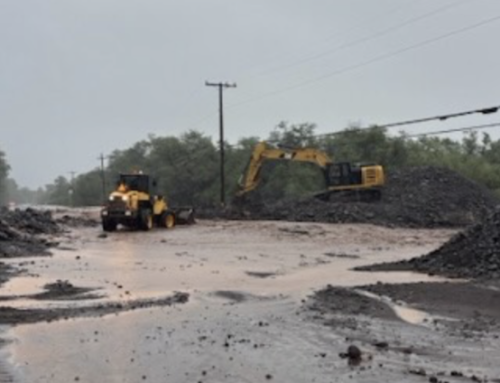
The March 2026 Kona storm battering the Hawaiian islands and the devastating 2023 Lahaina and Kula fires may seem like polar opposites, but they are actually two sides of the same coin. We are witnessing a climate defined by “weather whiplash”—a volatile cycle where the environment swings violently between intense flooding and severe drought (Center for Climate and Energy Solutions [C2ES], 2023). To understand this shift, we must look past the daily weather—the rain hitting your roof today—to the changing climate, the long-term patterns of temperature, precipitation, ocean conditions, wind, ice pack and atmospheric chemistry that govern our lives.
A Devastating Storm
A Kona storm is a powerful winter cyclone named after Kona, or leeward, areas of the islands, such as Big Island’s Kona district. Unlike our usual northeast trade winds, these storms strike from the southwest, turning typically sunny and dry leeward shores into targets for torrential rain and landslides. While some might label the current deluge a “100-year storm,” modern science suggests this terminology is outdated; these events are increasing in both frequency and severity.

The Science of “Wetter” Storms
The severity of the current Kona storm is a direct result of several climate change drivers:
Warmer Oceans, Stronger Fuel: As ocean temperatures rise, they provide more energy for subtropical cyclones like Kona lows to intensify (Intergovernmental Panel on Climate Change [IPCC], 2021).
Increased Atmospheric Moisture: For every 1°C of warming, the air can hold about 7% more water vapor (Skeptical Science, 2023). This “increased moisture capacity” is why this storm is dropping 20+ inches of rain; when it does rain, the atmosphere now has a much larger bucket to dump (National Oceanic and Atmospheric Administration [NOAA], 2024).
Atmospheric Rivers: Rising temperatures make “stalled” moisture plumes more frequent, leading to the sustained, “nuking” rainfall rates seen this week (WGCU, 2024).

The Connection to the 2023 Lahaina Fire
While this week is defined by water, the 2023 disaster was defined by its absence—yet both are linked to the same changing patterns:
Flash Droughts: Before the 2023 fire, Maui experienced a “flash drought” where high temperatures rapidly sucked moisture out of the vegetation (C2ES, 2023).
The Wind Link: The 2023 fire was fanned by 60–80 mph winds from Hurricane Dora, a storm that stayed hundreds of miles offshore. Climate change is making these powerful hurricanes more common in the Central Pacific, increasing the risk of “fire-weather” events even when a storm doesn’t make landfall (The Washington Post, 2023).
Compound Disasters: Scientists call these “compound disasters”—where long-term drying (drought) meets a sudden weather trigger (high winds or extreme rain), leading to catastrophe (IPCC, 2021).
The Pattern: Drier Dries, Wetter Wets
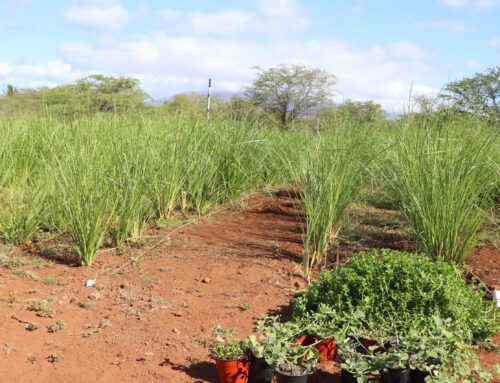
Those of us who farm are already aware of this. Current statistics confirm these trends are not outliers but a new baseline for Hawaii:
Increased Heat: Hawaii’s average temperature is now 2°F warmer than in 1950 (Skeptical Science, 2023).
Decreased Overall Rainfall: Despite this week’s floods, long-term data shows a declining trend in annual precipitation across most of Maui over the last 70 years (USGCRP, 2018).
Increased Drought: Dry regions on the leeward sides (like Lahaina) are projected to get even drier, while wet windward areas may see even more extreme rain events (NOAA, 2024).

Projections for Maui’s Freshwater Resources
Frequent extreme rainstorms do not mean increased fresh water resources. Over the next decade, overall decreased rainfall is expected to significantly stress Maui’s freshwater security. While extreme Kona storms provide massive bursts of water, they often lead to runoff rather than recharge, as the ground cannot absorb such high volumes quickly, sending freshwater into the ocean along with sediment (USGCRP, 2018). Simultaneously, the long-term trend of decreased trade wind rainfall reduces the consistent “drip” necessary to replenish volcanic aquifers (NOAA, 2024). This combination of increased evaporation from higher temperatures and unpredictable recharge cycles may lead to decreased groundwater availability and increased salinity in coastal wells (Skeptical Science, 2023).

Let’s Transition to Climate and Resiliency Action
These patterns—longer droughts followed by more violent, moisture-heavy storms—are expected to continue and increase in frequency (The Washington Post, 2023). We are moving from a climate of “pleasant and tranquil” weather to one of extremes where the evidence of both increased drought and severe storms is now a lived reality (IPCC, 2021).
We can no longer afford to sit on the sidelines; the urgency of this moment demands active participation to safeguard our environment, secure our economic future, and protect the health and welfare of our entire community.
What You Can Do
If you live in Maui County, please see this article: What You Can Do: Building a Resilient Maui County. If you live elsewhere in the US and are concerned about planning in your own area, please see Climate Ready America, a nonprofit that works with municipalities to provide “scalable, collaborative structure that helps communities implement equitable, science-based strategies to adapt to changing climate conditions (adaptation) and address greenhouse gas emissions (mitigation).”
References
Center for Climate and Energy Solutions. (2023). Extreme weather and climate change. https://www.c2es.org
Intergovernmental Panel on Climate Change. (2021). Climate change 2021: The physical science basis. Cambridge University Press. https://www.ipcc.ch
National Oceanic and Atmospheric Administration. (2024). Climate change: Global precipitation. https://www.climate.gov
Skeptical Science. (2023). Explaining the connection between moisture and temperature. https://skepticalscience.com
The Washington Post. (2023, August 10). How climate change fueled the Maui wildfires. https://www.washingtonpost.com
U.S. Global Change Research Program. (2018). Fourth national climate assessment: Volume II. https://nca2018.globalchange.gov
WGCU Public Media. (2024). Atmospheric rivers and the warming planet. https://news.wgcu.org